Introduction
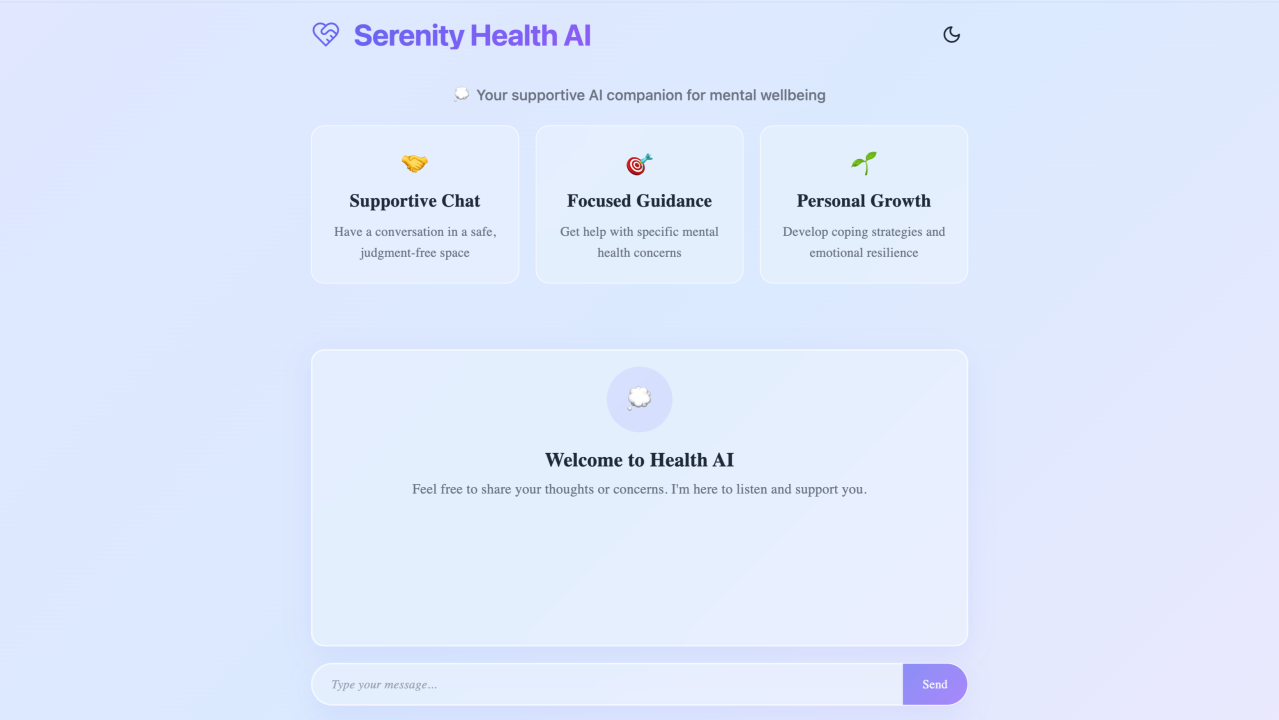
I recently launched Serenity Health AI — a project that sits at the intersection of artificial intelligence and mental wellness. What started as a technical build soon evolved into something far more meaningful: a personal exploration into how AI can reduce barriers to mental health support.
Mental health challenges affect millions, yet most people never receive the help they need. I built Serenity Health AI because I believe technology, when used responsibly, can help bridge that gap.
The inspiration
According to the World Health Organization, almost one billion people live with a mental disorder, but nearly two-thirds never seek professional help.
The reasons vary:
- Stigma
- Cost
- Lack of access
- Uncertainty about where to begin
This global treatment gap is what sparked Serenity Health AI — not as a replacement for therapy, but as a soft entry point for those unsure where to start.
Why AI in mental health?
The question is not whether AI can replace therapists. It cannot and should not.
The real question is:
How can AI make mental health support more accessible, immediate and stigma-free?
Serenity Health AI was built on these principles:
-
24/7 availability
Because emotions don’t wait for office hours. -
A judgment-free zone
A safe space where users can express themselves without fear. -
Accessibility
Geography or finances shouldn’t block someone from getting support. -
First-step guidance
Many people need help starting their emotional wellness journey.
AI is not a cure. But it can be a companion, a mirror, and a moment of relief.
The technology behind empathy
Building Serenity Health AI wasn’t just code. It was an attempt to create a calming digital presence.
The platform uses:
- Advanced NLP models to interpret emotional cues
- A soothing UI with glass morphism and dark mode
- Responsive layouts for easy use across devices
- A privacy-first architecture to protect every conversation
The goal was simple:
Make the experience feel warm, safe and human-friendly — even though it’s powered by machines.
Ethical considerations first
Mental health is sensitive. That means responsibility comes before features.
Serenity Health AI includes:
- Clear disclaimers about what AI can and cannot do
- Crisis resources when a user needs human help immediately
- Transparent communication about AI’s role
- Continuous improvements based on feedback from mental health professionals
This project is guided by a single rule:
Safety is not optional.
The future of AI in mental health
Serenity Health AI is just one step in a larger movement toward hybrid mental healthcare.
In the future, we may see:
- AI assistants working alongside therapists
- Early detection of emotional distress through predictive analytics
- Personalized daily wellness plans
- Greater accessibility for remote or underserved communities
The world is evolving — and AI will play a role in making mental health support more inclusive.
Lessons learned
Working on this project reshaped how I think about technology and people.
Here’s what I learned:
- Technology can create meaningful human moments
- AI should enhance, not replace, human care
- Great mental health tools require empathy as much as engineering
- User privacy and safety must always come first
The road ahead
This is just the beginning.
As AI advances, Serenity Health AI will continue evolving — but the mission stays the same:
Make mental wellness more accessible, understanding and effective.
If even one person feels seen, supported or understood because of this project, that’s a win.
Join the conversation
Try Serenity Health AI yourself:
https://serenityhealth.sahaibsingh.com
I’d love to hear your thoughts.
How should AI support mental health?
What boundaries should it respect?
What possibilities excite you?
Let’s continue this conversation — about mental wellness, technology and the future of care.